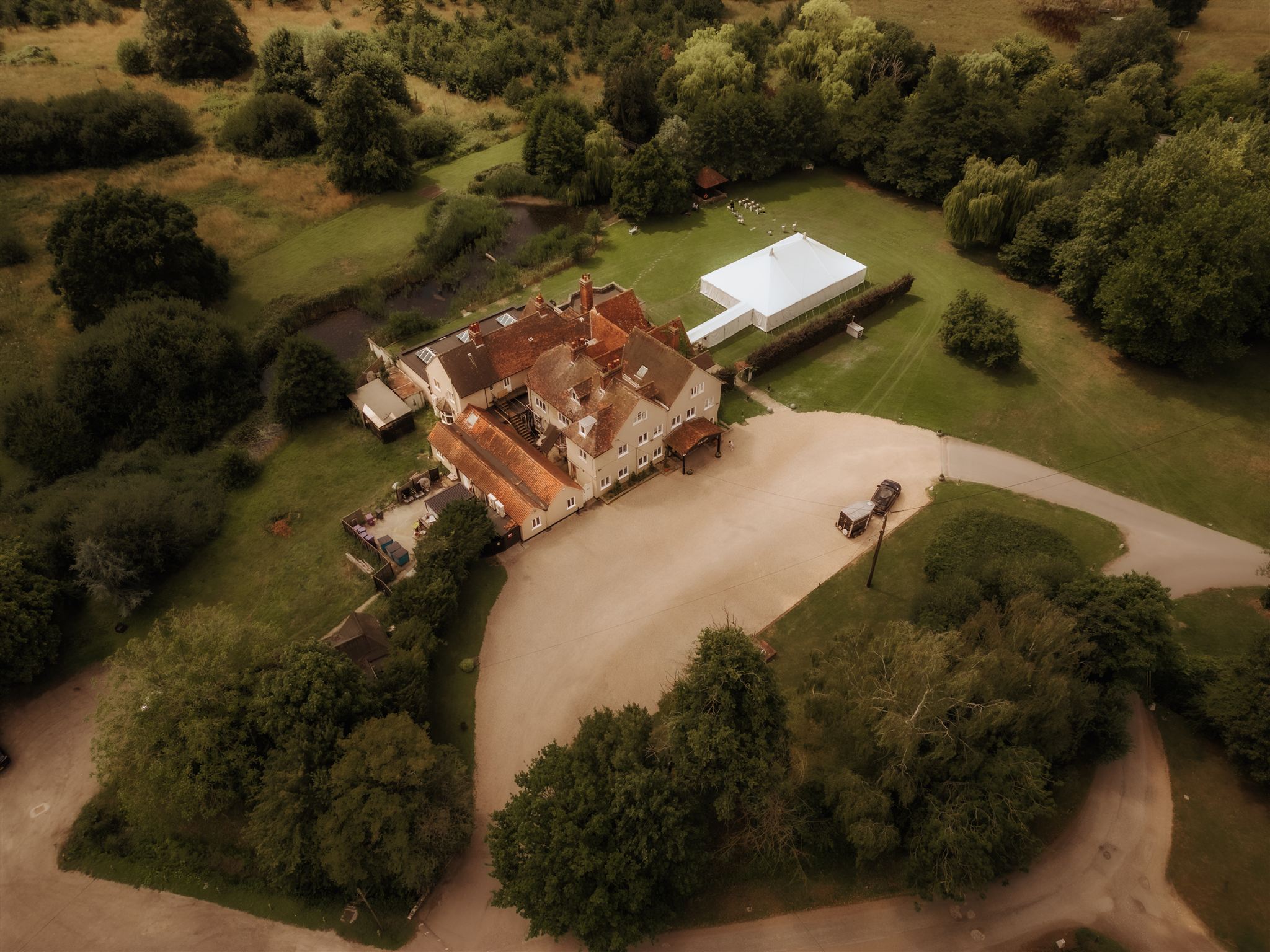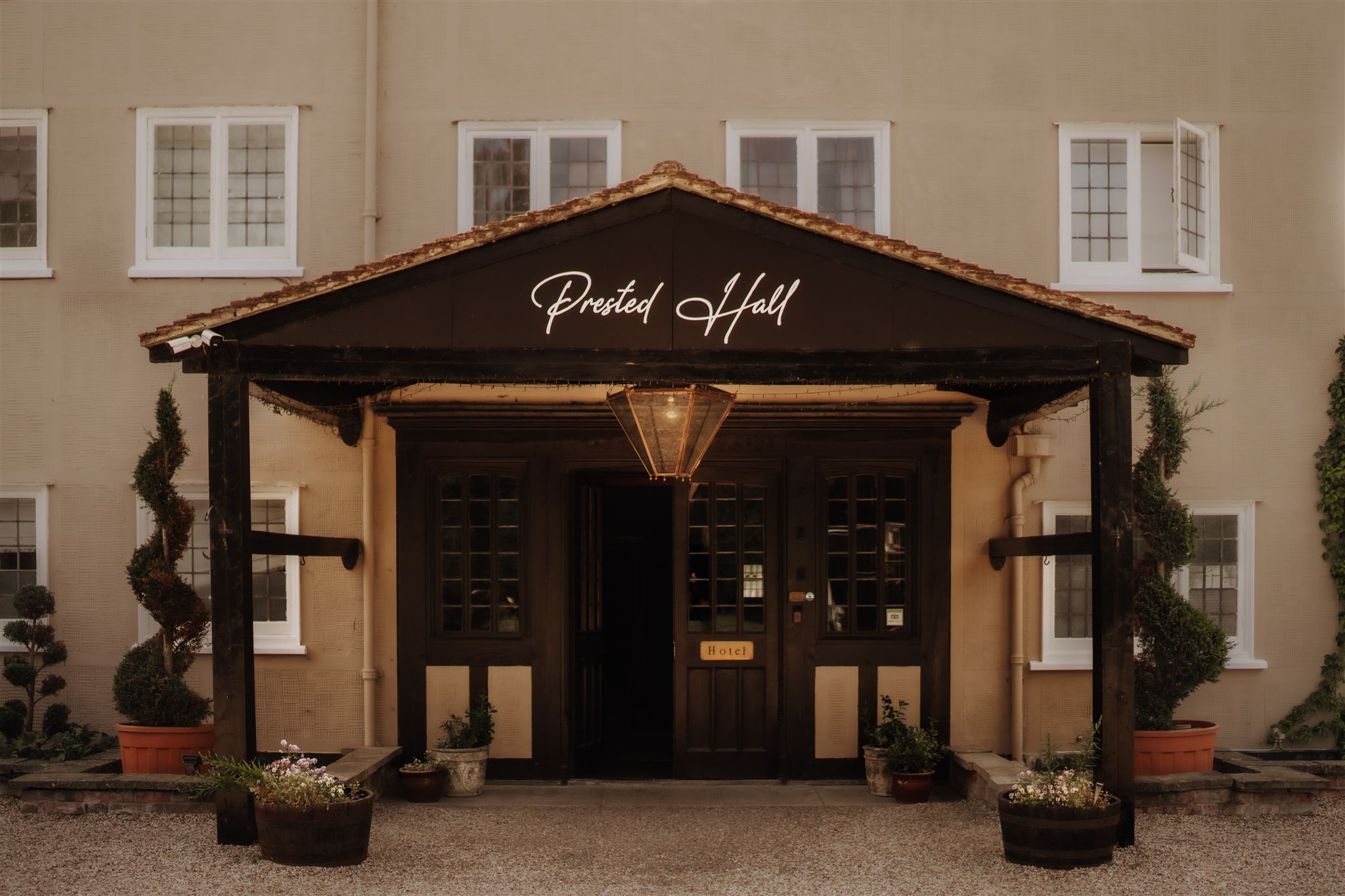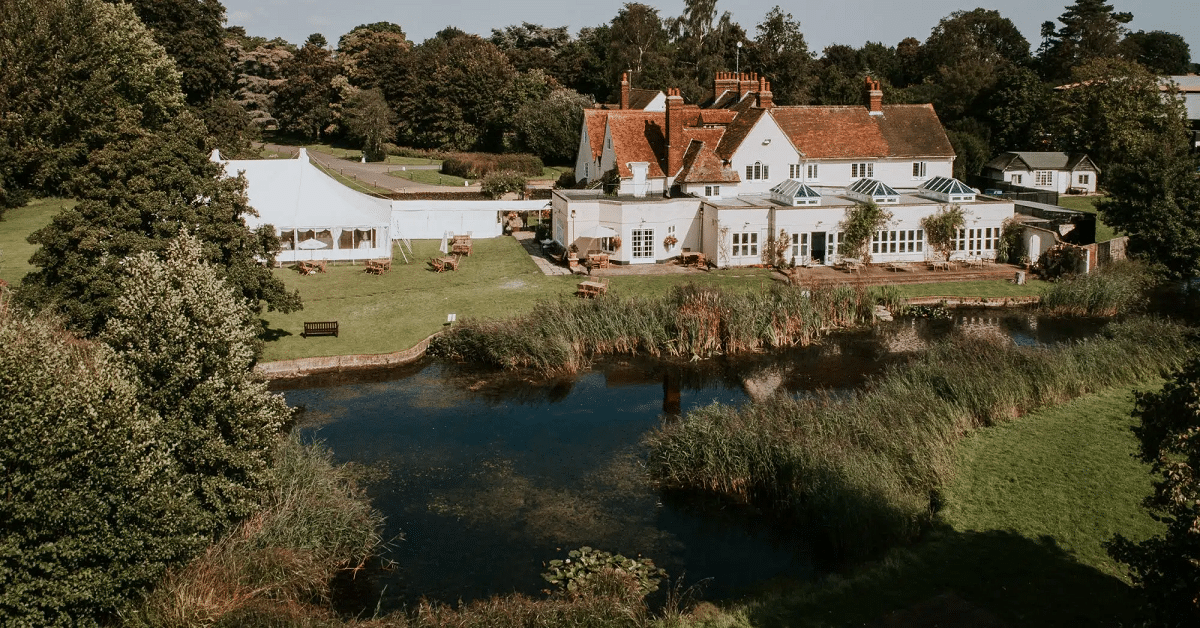
The Living Story of Prested Hall
Long before its gardens welcomed wedding guests or its halls echoed with laughter, Prested Hall was a place of quiet significance. Its story begins in 1086, when the manor—then known as Peresteda—appears in the Domesday Book. Ranulf Peverel, one of William the Conqueror’s knights, had been granted the land as a reward for his loyalty. On that modest patch of Essex soil, two beehives buzzed, a mare grazed, and a foal stumbled through the fields—small signs of life that hint at the rhythms of the 11th century. Even then, Peresteda was regarded as one of Feering’s “two capital manors,” a place of note in a new Norman kingdom.
By the 14th century, life at Prested Hall had changed. Humphrey de Weston took up residence, and over generations, the family transformed the manor into a stately country house. Imagine candlelight flickering on timbered walls, the smell of roasting meat drifting from the kitchen, and children running along the stone corridors. The Westons held the estate for nearly 240 years, their laughter, disputes, and celebrations echoing in rooms whose timbers still hold the weight of centuries. When Robert Weston died in 1601 without a son, the estate passed to his daughter Amye. Her marriage brought the Hall into the Tyndale family, beginning a new chapter of quiet change and continuity.
Over the next two centuries, Prested Hall saw families come and go, each leaving their mark. Tenant farmers tended the fields under the stewardship of owners like William Raven, while the rhythms of rural life shaped the estate’s quiet charm. In 1898, Nathaniel Newman Sherwood, owner of the seed company Hurst & Son, brought a new energy: Prested Hall became a weekend shooting lodge, a retreat where the family could walk the grounds and feel the weight of history around them.
The Hall was not immune to the turbulence of the 20th century. During World War II, its walls were requisitioned by the army. Later, it became a place of care and new beginnings, as a maternity hospital and nursing home where countless local children first opened their eyes to the world. In the 1950s, it welcomed the Spastics Society (now Scope), offering comfort and hope to those in need. Each life, each story, became part of the fabric of Prested Hall.
By the 1990s, the Hall had fallen silent. It was the owner then who brought it back to life, restoring the building with devotion and care. They preserved its history while introducing modern comforts, creating a space where today’s celebrations coexist with centuries of memory. Two privately funded real tennis courts were built on the grounds, honouring traditions both ancient and unique.
Now when you walk the halls of Prested Hall, you are not just stepping into a venue—you are stepping into history. Knights, noble families, farmers, mothers, and dreamers all left their mark here. Every stone, every timber, every path through the gardens tells a story—a story that continues with every guest, every wedding, and every celebration. Prested Hall is, and always has been, a living story.
Step into a venue where history and elegance meet. Prested Hall isn’t just a place to celebrate—it’s a place where stories begin, memories are made, and every detail is steeped in centuries of charm.
From its stunning medieval timbers to its sweeping gardens, Prested Hall offers a backdrop unlike any other. Imagine exchanging vows in a hall that has welcomed families for nearly a thousand years, or hosting a reception under ceilings that have witnessed generations of life and laughter. The combination of historic character and modern luxury ensures your day is unforgettable and effortlessly comfortable.
At Prested Hall, every celebration becomes part of a living story—a story that blends centuries of heritage with the joy, beauty, and love of today. Step into history. Create your own memories. Make your story unforgettable.